
A Delhi court has sentenced three former officials of a company to four years in jail for defrauding the Industrial Development Bank of India (IDBI). The court emphasised that leniency would undermine the justice system and public confidence in the law.

The much-awaited board meeting of Tata Sons did not discuss listing of the holding company or a third term for Chairman N Chandrasekaran.

A gang of armed robbers targeted a State Bank of India branch in Surat, Gujarat, looting Rs 50 lakh in cash after threatening staff and customers.
The CBI has filed a chargesheet against AVJ Developers, bank officials, and others for allegedly cheating financial institutions and homebuyers in Greater Noida.

An EY India report suggests that banks must compete on customer experience and evolve physical branches into phygital advisory hubs. The report highlights the importance of anticipating customer needs and blending digital tools with human interaction.

Cash remains dominant for many transactions despite continued expansion in digital payments across the country.

Overseas travel spending by Indians, including holiday trips, decreased by $212.43 million to $1.09 billion in March compared to February, according to the Reserve Bank of India's latest data.

Indian stock markets are set to be influenced by developments in US-Iran negotiations, crude oil prices, and foreign investor activity in the upcoming holiday-shortened week, according to market analysts.

Indian equity markets, including the Sensex and Nifty, experienced a significant downturn for the second consecutive day, driven by escalating geopolitical tensions in West Asia and persistent foreign fund outflows.

India's foreign exchange reserves saw a significant increase of USD 6.295 billion, reaching USD 696.988 billion for the week ending May 8, as reported by the Reserve Bank of India.


Rapid growth in personal gold loans has raised concerns over borrower leverage, large-ticket exposure and volatility in gold prices, points out Swaminathan J, Deputy Governor, Reserve Bank of India.

India's gross savings rate is projected to be nearly 47 basis points higher in FY25 than previously estimated, following the Securities and Exchange Board of India's (Sebi) revision of the methodology for calculating household savings routed through the securities market.

The Reserve Bank of India (RBI) has cancelled the banking licence of Paytm Payments Bank, citing that the bank's affairs were conducted in a manner detrimental to the interests of the bank and its depositors, and its management was prejudicial to public interest.

India's mutual fund industry has significantly increased its share of public trading in the stock market, widening its lead over the Life Insurance Corporation of India (LIC) for the fifth consecutive year. While LIC's share of free-float listed shares has fallen to 7.42% as of March 2026, the mutual fund industry's share has surged to 22.92% from 7.06% in 2012.

The Indian rupee rebounded 50 paise from its all-time closing low to settle at 96.36 against the US dollar, driven by retreating crude oil prices, signs of easing geopolitical friction, and likely central bank intervention.

The Reserve Bank of India (RBI) announced that it processed 99.7 per cent of applications within the prescribed timeline under its Citizen's Charter in April 2026. The central bank handled a total of 21,150 applications, showcasing its commitment to efficient service delivery.

Indian benchmark indices, Sensex and Nifty, closed marginally higher after a volatile trading session, driven by value buying in IT and select blue-chip counters, despite global crude price hikes and a weak rupee.

The Indian rupee is highly vulnerable among Asian currencies, with Barclays and MUFG warning of a potential depreciation towards 100/$ if the West Asia conflict persists, driven by widening current account deficits and elevated crude oil prices.

Flows from overseas Indians into Non-Resident Indian (NRI) deposit schemes have fallen by 24.17 per cent to approximately $11.04 billion between April 2025 and February 2026, down from $14.56 billion in the previous year, according to Reserve Bank of India (RBI) data.
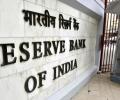
The Reserve Bank of India (RBI) has removed the prior approval requirement for non-bank entities to form tie-up arrangements for facilitating outward remittance services through banks in India, aiming to streamline the process and enhance efficiency.

Credit card transactions in India have surged over 2.6 times between 2021 and 2025, reaching 570 crore volumes and Rs 23.2 lakh crore in value, with private sector banks significantly increasing their market share, according to a recent RBI report.

Indian benchmark indices, Sensex and Nifty, rallied significantly following a sharp decline in crude oil prices. This decline was triggered by US President Donald Trump's announcement of progress in negotiations with Iran towards a peace agreement, which led to renewed optimism in global markets.

RBI Governor Sanjay Malhotra stated that the central bank is closely monitoring whether the supply shock from the West Asia conflict will lead to a generalised price rise, potentially necessitating monetary policy action.

Indian benchmark indices Sensex and Nifty experienced declines due to a sharp rally in crude oil prices, continuous foreign fund outflows, and geopolitical uncertainties. Regulatory developments in the banking sector, particularly the implementation of the Expected Credit Loss (ECL) framework, also contributed to the selling pressure.

'We strongly believe that anyone with capability and a strong work ethic should have a chance at the top job.'
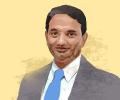
TCS, India's largest IT firm, is aiming to become the world's leading AI-led technology services company. CEO K Krithivasan highlights the company's strategy, including upskilling its workforce and executing nation-scale projects in India.

The upcoming Tata Sons board meeting in June could possibly throw some light on several critical issues that may have a bearing on the future of the corporate behemoth.

India's foreign exchange reserves saw a significant drop of USD 7.794 billion, settling at USD 690.693 billion for the week ending May 1, as reported by the RBI, reflecting the impact of global events and central bank interventions.

Indian benchmark equity indices, Sensex and Nifty, closed lower due to investor caution over rising bond yields, a weaker rupee, and fresh fuel price hikes, which have revived inflation concerns.
Indian investors have seen their wealth erode by a staggering Rs 16.77 lakh crore over four trading sessions, as the markets faced deep losses driven by elevated crude oil prices, geopolitical tensions, persistent foreign fund outflows, and a record-low rupee.

Indian equity benchmark indices, Sensex and Nifty, tumbled nearly 2 per cent for the fourth consecutive session, driven by elevated crude oil prices, escalating US-Iran tensions, unabated foreign fund outflows, and a depreciating rupee.
Indian equity benchmark indices, Sensex and Nifty, tumbled nearly 2 per cent for the fourth consecutive session, driven by elevated crude oil prices, escalating US-Iran tensions, unabated foreign fund outflows, and a depreciating rupee.

'If the war continue for a longer period of time, it is just a matter of time before the government will pass on some of the price increases.'

State Bank of India has embarked on a drive to cut the Know Your Customer (KYC) process to a single one across its branches, a top official said on Tuesday.

Reliance Industries Ltd reported a 12.5 per cent fall in its March quarter net profit, primarily impacted by the global energy crisis affecting its oil and chemicals business, while its consumer-facing Jio Platforms unit saw a 13 per cent increase in profit after tax.

If TVK MLAs and ministers are perceived as clean, or demonstrably cleaner than their predecessors, the credibility dividend will be enormous. The voter will feel rewarded, points out Ramesh Menon.
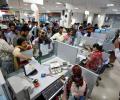
UPI transactions reached 22.35 billion in April, marking a 25 per cent increase compared to April 2025. UPI now accounts for 85 per cent of all digital transactions in India and is live in eight countries.
A man arrested for allegedly looting Rs 50 lakh from a State Bank of India (SBI) branch in Gujarat's Surat was shot in the leg by police after he opened fire at them in an attempt to escape.

'When we start describing somebody as an enemy that is the start of politics and emotion after which no business can take place.' 'We need to get out of this, allow Indian businessmen to do business with China.'
